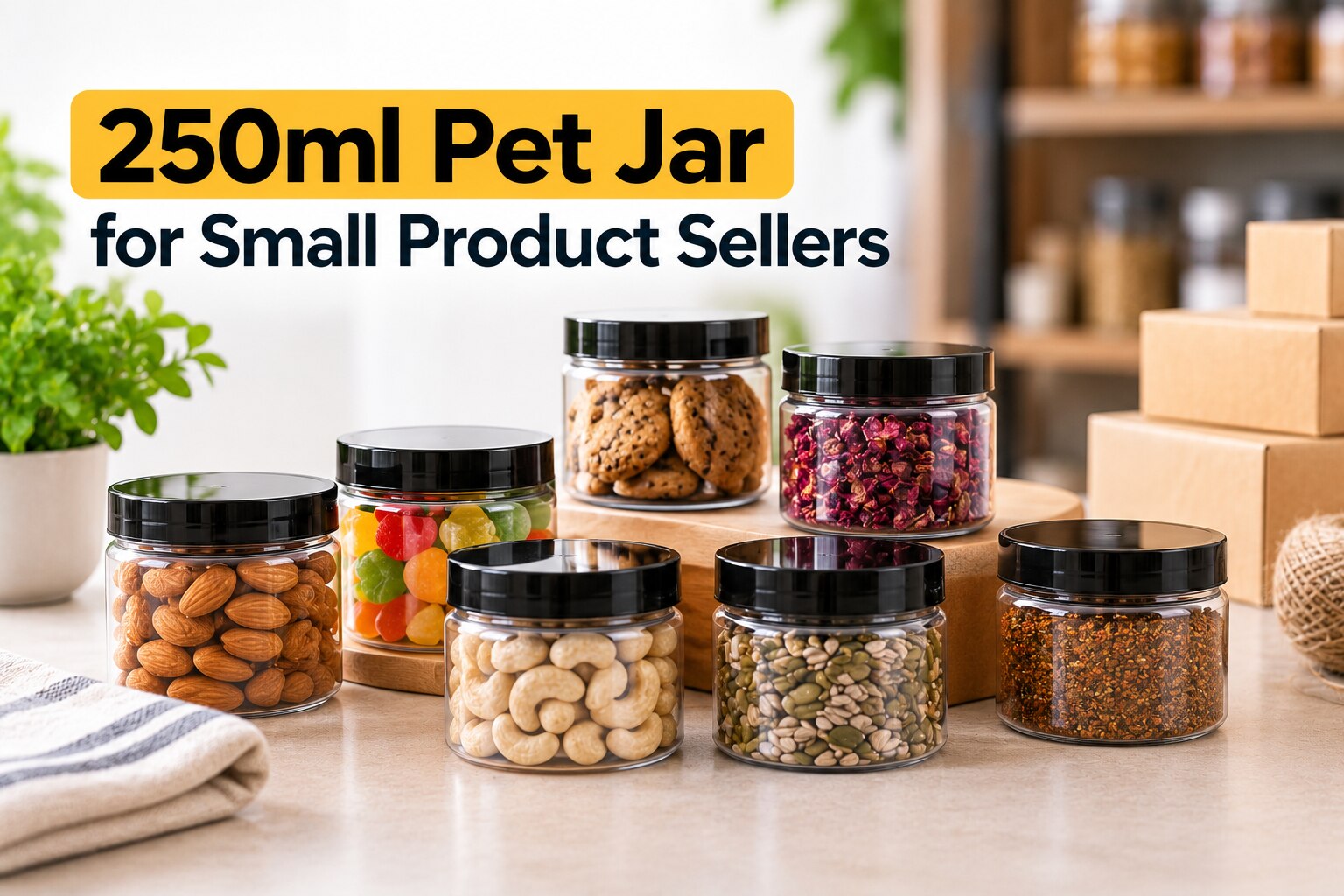
A nominal 250ml capacity does not tell you how much spice, snack, powder or cosmetic a jar will hold, whether its closure will prevent leaks, or whether its shape will support a saleable label. By the end, you will be able to match the jar to your product, test the complete pack and calculate whether it reduces handling and transport problems for your business.
Key takeaways
- 250ml capacity does not equal 250g; confirm density and usable fill volume.
- Choose PET jars for dry goods, powders, creams and other compatible products.
- Check product compatibility, closure fit, seal integrity and headspace before filling.
- Approve filled samples through leak, drop, stacking and shelf-life checks before ordering.
What does a 250ml PET jar actually hold?
250ml is a volume label, not a promise that your product weighs 250g. Nominal volume describes the jar’s stated capacity; overflow capacity is what it holds to the brim, while usable internal volume leaves room for the closure and intended headspace. Target net weight is the actual mass you declare and sell.
| Product at the same fill level | Relative weight | Why |
|---|---|---|
| Dense spice blend | Higher | Fine particles pack tightly |
| Seeds or confectionery | Higher | Solid pieces leave fewer air gaps |
| Puffed snacks or aerated powder | Lower | Air occupies more of the volume |
Ask the supplier for the jar’s height, body diameter, mouth opening, neck finish, overflow capacity and internal dimensions. Fill a sample with your actual product, leave the intended headspace, and weigh it before approving the pack size.
The main 250ml plastic jar benefits are repeatable portion control and simpler stockkeeping. A pet jar for small products suits trial packs, gift assortments, subscription boxes and low-ticket products because one compact format can serve several ranges.
Do not skip practical checks. Confirm that a scoop reaches the base, observe settling after filling and transport, and inspect whether the final level still looks full and presentable. A wide mouth may improve access, while excess headspace can make a settled product look underfilled.
Which products suit a 250ml PET jar?
A 250ml PET jar suits dry spices, seasoning blends, seeds, tea, nuts, snack mixes, confectionery, bath salts, craft supplies and other small-batch household products. These 250ml PET jar uses give small sellers repeatable portions for trial packs, gift assortments and local orders.
Low weight, clear product visibility and shatter resistance simplify handling, reduce breakage risk and create compact shelf displays.
Check the product before choosing the format:
- Oxygen- or moisture-sensitive powders and crisp snacks need barrier testing with the jar, closure and liner.
- Light-sensitive oils and spices may need opaque or UV-protective PET, an outer carton or a shorter shelf life.
- Essential oils, solvents, aggressive cleaners, strongly aromatic products and high-fat products need compatibility testing for permeation, stress cracking, odour transfer and label failure.
- Bangalore’s humidity makes moisture-ingress testing important for powders, salts and snacks.
A screw-closed PET jar for small products offers better repeated access and shelf presentation than these alternatives:
| Option | Main advantage | Better choice when |
|---|---|---|
| 250ml PET jar | Visible, light, resealable | You need labelled retail display and portion access |
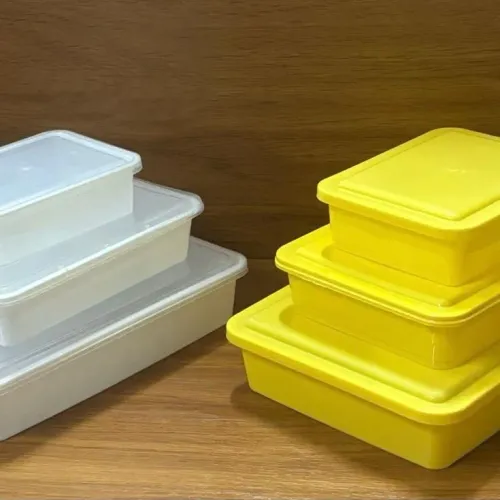
| Shallow disposable food container | Wide, practical, low-cost | You sell prepared food for short transport |
| Smaller bottle | Narrow, controlled dispensing | The product is liquid or needs a small opening |
| Plastic food tub | Broad opening and stacking | Scooping matters more than vertical shelf display |
A jar’s depth improves visibility and label space, while its closure supports repeated opening; a shallow container suits takeaway use, not a labelled dry retail product.
What must you verify before filling and sealing it?
A 250ml plastic jar benefits small sellers only when its material, temperature limits and closure system match the product. Obtain written food-contact documentation covering material suitability, migration compliance and traceability; “food grade” alone proves nothing. Confirm the approved range for filling, refrigeration and freezing.
Conventional PET is not automatically hot-fill safe: heat can deform it, while cooling can cause paneling or loss of shape.
1. Request the exact cap type, neck thread or lug finish, liner material, tamper-evident band, shrink sleeve or induction-seal option, leak-resistance specification and confirmation that caps are included.
2. Approve a matched jar-and-cap sample. Two 250ml jars can have different neck diameters and threads, so their caps are not interchangeable. Check that the liner sits evenly and contacts the sealing land.
3. Fill samples with the actual product and target headspace. Tighten to the supplier’s specified cap torque, invert the jars, then inspect them after vibration and courier-style handling. Look for leaks, cap loosening, poor seal contact and product residue on the sealing land.
4. Test the complete pack in Bangalore’s warm conditions and monsoon humidity. Check moisture ingress, label or sleeve performance and shelf-life behaviour; an empty jar tested in a dry room cannot establish product protection. Include secondary protection when delivery exposes the pack to compression or abrasion.
How does a 250ml PET jar compare with other small packs?
A 250ml PET jar is the stronger choice for a labelled dry product when low weight, impact resistance and repeated opening matter more than heat tolerance or a luxury appearance. Those are the main 250ml PET jar benefits for small sellers in Bangalore, especially for local delivery and compact ranges.
| Option | Strength | Limitation |
|---|---|---|
| Glass jar | Premium shelf appearance, better heat tolerance and strong product protection | Heavier and breakable; a 525ml glass ghee jar suits a larger, heavier premium pack, not a compact low-ticket range |
| Pouch | Lightweight, efficient barrier options and low storage volume | Contents are hidden, resealing varies, and merchandising is weaker without an outer carton |
| Hinged box | Protects pieces and gives a positive closure for selected goods | Less suitable for loose powders or products needing a jar’s deep, visible cavity |
| 100ml or 250ml disposable food container | Shallow, practical for prepared food, takeaway use and short transport cycles | Less shelf-ready; a matched jar closure handles repeated opening better for a labelled dry product |
Choose transparent PET to show colour and fill level, or opaque or UV-protective PET for light-sensitive oils, spices and nutraceuticals. On a curved wall, confirm label adhesion, shoulder clearance and the usable panel: request exact label height and wrap length, then compare pressure-sensitive labels, shrink sleeves and direct printing.
A small product packaging jar still has a landed cost beyond the quote. Calculate jar, cap, liner, label, freight, case-pack volume, storage, rejects, secondary protection and breakage per saleable unit.
How should a small seller approve the format before ordering?
Approve the format only after a filled, labelled pack passes handling tests; an empty jar proves very little.
- Ask for a dimensional drawing or physical sample showing height, diameter, mouth opening, neck finish, cap compatibility, usable volume and case-pack quantity.
- Fill samples with the real product, measure the target net weight, check scoop access and confirm the intended headspace.
- Apply the proposed label to a filled small product packaging jar. Inspect wrinkles, adhesion and abrasion after opening, stacking and handling.
- Record storage temperature, humidity exposure, light sensitivity and delivery route. Test the complete pack, including jar, cap, liner or seal and label, under those conditions.
- Invert filled samples, vibrate them and give them courier-style handling. Check leakage, cap torque, seal contact and residue on the sealing land.
For the 250ml PET jar benefits for small sellers in Bangalore, compare the final pack against the product’s actual risks:
| Format | Choose it when | Choose another format when |
|---|---|---|
| PET | Low weight, impact resistance, clear shelf visibility and compact repeatable portions matter | Heat, barrier performance or chemical compatibility dominates |
| Glass or specialised pack | Premium glass presentation or demanding product protection matters | Breakage, transport weight and compact local delivery matter most |
Ankita Enterprises can help a Bangalore seller compare physical samples, closures and related packing materials, but the seller remains responsible for product-specific testing and compliance.
Related product
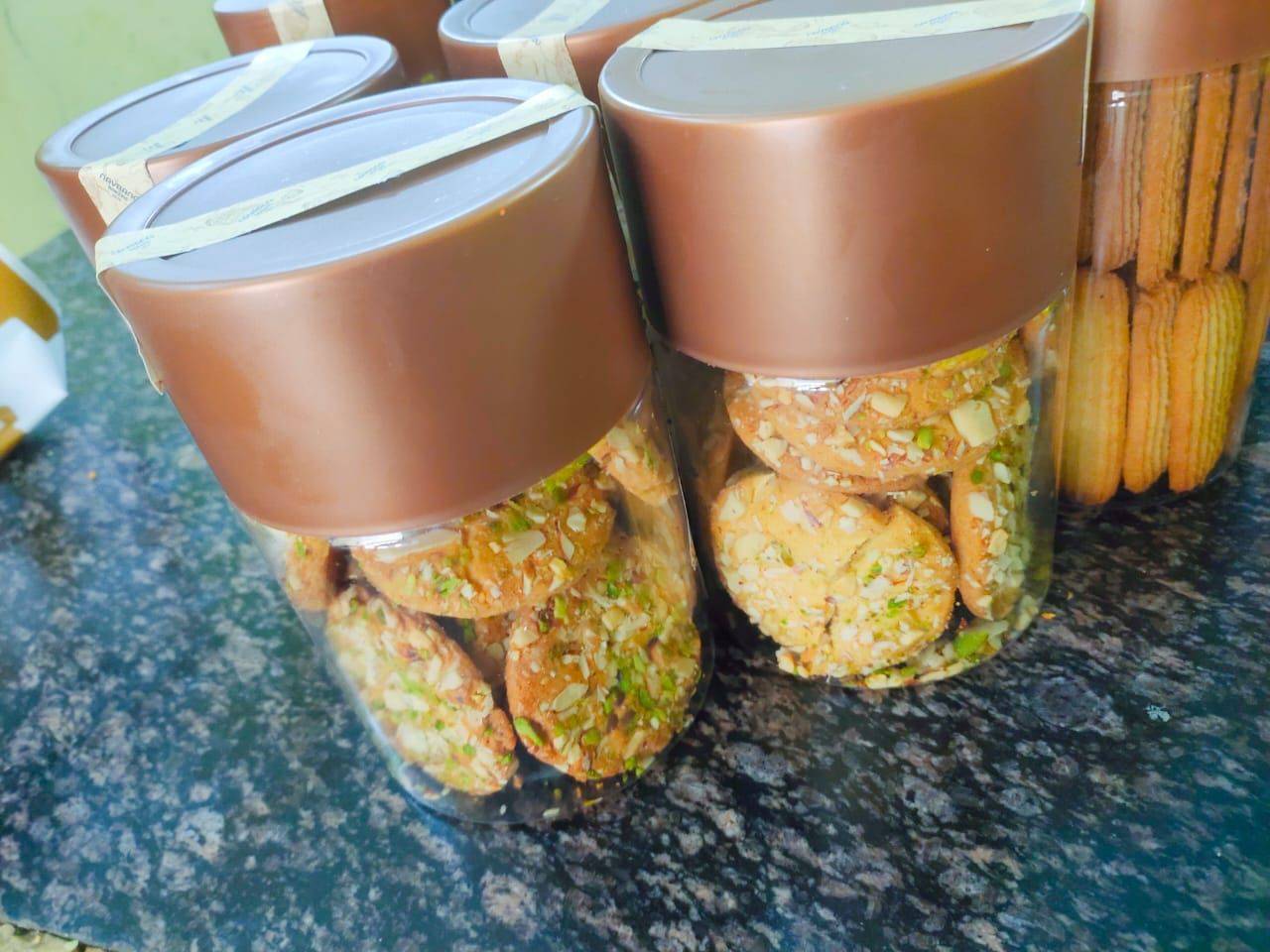 | Pet Jar 250ml 250ml pet jar View product → |
Frequently asked questions
What does a 250ml PET jar actually hold?
A 250ml label states nominal volume, not product weight. Overflow capacity reaches the brim, while usable volume leaves room for the closure and headspace. Calculate the target net weight from product density and confirm it with a filled sample.
Which products suit a 250ml PET jar?
A 250ml PET jar suits products such as dry snacks, spices, powders, confectionery, seeds, creams and other compatible goods. Check chemical compatibility, moisture protection, light sensitivity and dispensing needs before selecting it.
What must you verify before filling and sealing a 250ml PET jar?
Verify the jar resin, neck finish, closure fit, liner or induction seal, product compatibility, headspace, leak resistance and declared net weight. Test the filled pack at the intended storage temperature.
How does a 250ml PET jar compare with other small packs?
Compared with pouches, PET jars offer rigid walls and easier stacking or reuse; pouches use less material and shipping space. Glass gives a premium feel but adds weight and breakage risk. Cups and tubs suit wider openings but can provide less protection.
How should a small seller approve the format before ordering?
Fill samples using the actual product, closure and sealing process. Check net weight, leakage, opening, label fit, drop resistance, stacking and appearance after storage. Order only after the sample passes the checks your distribution route requires.
Keywords