A 650ml box is a portioning decision, not a universal serving size: rice, biryani, noodles, salads and cut fruit occupy the space differently, and liquid foods demand more headspace. You will be able to match foods to usable capacity, select the right material and lid, and test whether a packed meal can survive Bangalore heat and motorcycle delivery.
Key takeaways
- Treat 650ml as brim capacity; leave headspace for the lid and hot-food expansion.
- Use the box for one compact meal or a substantial side, not several accompaniments.
- Choose leak-resistant lids and match material to temperature, oil and reheating needs.
- Cool food safely, control condensation and test seals before summer delivery.
Which summer foods fit within 650ml without overfilling?
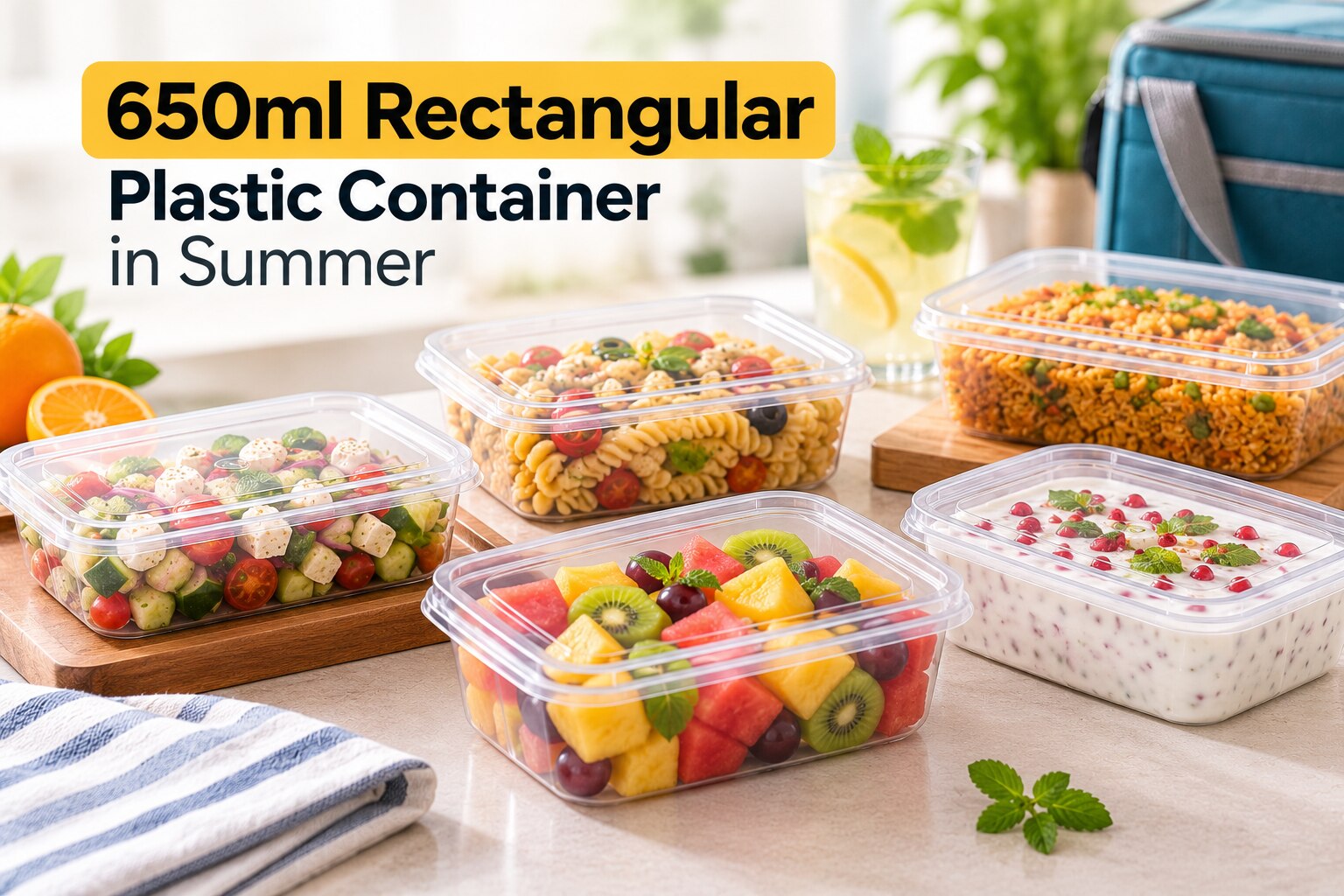
A 650ml rectangular container suits one compact meal or a substantial side, not a large mixed meal with several accompaniments. The 650ml rating is brim capacity; usable volume falls when you leave headspace for lid engagement, expansion and spill control.
| Food | Practical fit | Packing limit |
|---|---|---|
| Biryani, rice with curry, noodles, pasta, poha or upma | One serving | Keep gravy moderate and leave headspace |
| Salad or cut fruit | One portion | Loose ingredients occupy more space than pressed rice |
| Sandwiches or snacks | One sandwich or compact assortment | Fried items need room to avoid crushing |
| Rice, protein and vegetables | Compact layered meal | Separate garnish or large sides can exceed capacity |
These are useful 650ml food container uses for a 650ml rectangular container for summer: single meals, substantial sides and controlled takeaway portions. A large liquid curry can spill before the box appears full, while rice with several accompaniments needs more space for separation.
A garnish that must remain dry also needs its own compartment or cup.
Measure actual menu portions before ordering. Weigh or measure the filled product, because dense rice, loose salad, fried foods and gravy occupy different volumes at the same nominal weight. Overfilling forces food into the seal channel, deforms the lid and increases leakage. A compact layered meal fits only when the tested portion leaves visible headspace.
How does the rectangular shape improve summer meal packing?
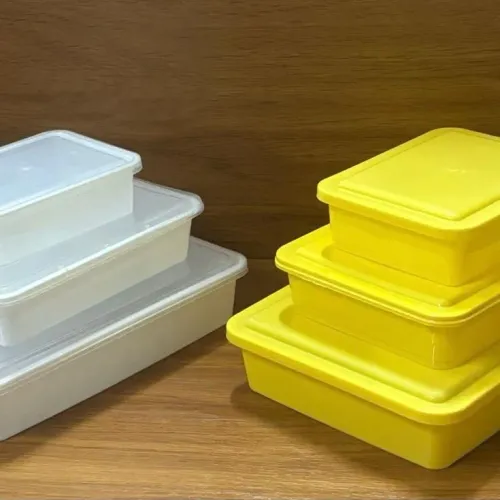
A rectangular food box for seasonal meals is usually more useful than a 500ml round box when the portion is a compact meal. Straight sides, a shallow footprint and a broad surface use shelf, crate and delivery-bag space efficiently, leaving fewer voids between packs.
| Option | Practical advantage | Trade-off |
|---|---|---|
| 500ml round container | Suits a smaller single item | Holds less and wastes corner space when packed in crates or bags |
| 650ml rectangular plastic container | Fits layered rice, vegetables, protein and garnish | Broad surface exposes food to more air, drying and temperature change |
| 750ml foil container | Provides more room for larger portions | Can encourage oversized servings and stack less securely |
The main 650ml rectangular plastic container benefits for summer food in Bangalore are efficient portioning and stable stacking, not refrigeration. Use the space in layers: rice or noodles at the base, vegetables and protein beside or above them, then garnish where it will not be crushed.
The format also stacks with fewer gaps than round tubs, but a broad surface is not automatically better for long holding because it increases exposure to air and heat changes.
Test filled cartons, not only empty containers. Corner damage can weaken the base, a warped lid can release during delivery, and poor nesting can make a stack lean. Include the densest and most liquid menu portions, then check the carton after lifting, tilting and normal delivery movement.
Which material and lid specifications suit each food?
A 650ml rectangular container for summer is not automatically suitable for every menu item. Polypropylene is commonly selected for hot rice, biryani and curry, while PET is commonly selected for chilled foods, but the manufacturer’s limits control the decision.
| Food | Material starting point | Lid and seal requirement |
|---|---|---|
| Hot rice, biryani, noodles or pasta | Polypropylene | Declared hot-fill range; tight snap-fit or gasket |
| Watery curry or oily gravy | Food-contact resin approved for that food and temperature | Verified gasket or tight snap-fit; reject a loose presentation lid |
| Acidic foods, such as tomato or lemon dishes | Resin with documented compatibility | Seal must remain secure without softening or staining |
| Salad, cut fruit or raita | PET is commonly used for chilled food | Clean leak-resistant closure that tolerates condensation |
| Desserts | PET or polypropylene, according to the recipe and temperature | Closure must prevent leaks and protect texture |
Do not judge a box by gloss, colour or apparent thickness. Check the resin, wall thickness, internal dimensions, lid engagement, seal design and declared temperature range. Do not call it microwave-safe unless the container carries a specific marking backed by testing.
Ask the supplier for evidence that identifies:
- The plastic material and intended food types
- The minimum and maximum temperature limits
- Food-contact compliance documentation for applicable Indian requirements
- Restrictions on acidic, oily or hot contents
A plastic container for summer takeaway needs a tested seal, not merely a good-looking lid. For chilled desserts, salads and fruit, condensation control matters as much as leak resistance.
How should you pack food to control steam, leaks and summer spoilage?
Bangalore summer heat makes packing after filling as important as choosing a plastic container for summer takeaway. A 650ml rectangular container for summer does not cool food or prevent spoilage.
Hot, moist food in a closed box creates lid condensation: samosas, pakoras, fries and fried chicken soften, sauces dilute, and salads or cut fruit look wet.
Choose the packing method for the food’s texture and leak risk:
| Option | Result | Best use |
|---|---|---|
| Controlled headspace | Reduces trapped steam while retaining spill protection | Rice meals, noodles and pasta |
| Vented lid | Preserves crispness but reduces spill resistance and allows more odour or dust exposure | Fries, pakoras, samosas and fried chicken |
| Separate sauce or dressing cup | Keeps moisture away from the main food | Salads, cut fruit, fried snacks and layered meals |
Do not fill a hot box to the lid. Leave the specified headspace for steam and expansion, and use an absorbent pad only when it is approved for food contact and cannot touch the seal.
- Keep perishable chilled foods at 5°C or below, and use insulated or refrigerated handling for cut fruit, salads, raita and other cold foods.
- Chill cut fruit and salad ingredients before filling; condensation will still require a clean, leak-resistant closure.
- Keep hot foods at 60°C or above where that control applies, using controlled hot holding or rapid delivery.
- Treat venting as a texture choice, not temperature control. Packaging cannot make prolonged ambient holding safe.
What tests prove that a 650ml box is ready for delivery?
A filled-container trial proves whether a 650ml box is ready for Bangalore delivery; an empty fit check does not. Use the densest rice dish, most liquid gravy and greasiest menu item, filling each to the intended headspace.
| Test | How to run it | Reject when |
|---|---|---|
| Filled inversion | Close the lid, invert the box over absorbent paper, then open and reclose it before repeating | Gravy leaks, reaches the seal channel or stains the paper |
| Stacking and movement | Load filled boxes in a carton, then apply normal stack weight and use vibration or controlled drop movement | Corners deform, lids lift or boxes shift |
| Hot/cold trial | Test filled boxes at the hot and chilled conditions used during dispatch | The lid warps, seal loosens, condensation causes leakage or food quality suffers |
| Empty nesting | Stack and separate empty containers repeatedly | Boxes jam, lean or fail to nest consistently |
- Check whether the lid releases when the delivery bag tilts.
- Reject a format that depends on a static water test alone; food particles in the seal channel and lid flex can create failures water will not show.
- Measure usable volume, not just the 650ml brim capacity, against the actual portion.
The 650ml rectangular plastic container benefits for summer food in Bangalore include efficient portioning and stacking, not refrigeration. Its 650ml food container uses work only when dispatch includes proper hot holding, rapid delivery or insulated cold handling.
When comparing suppliers, Ankita Enterprises can provide a basis for requesting material details, temperature limits, lid samples and filled-container trials before a business order. Accept the format only when its seal survives the complete dispatch process.
Related product
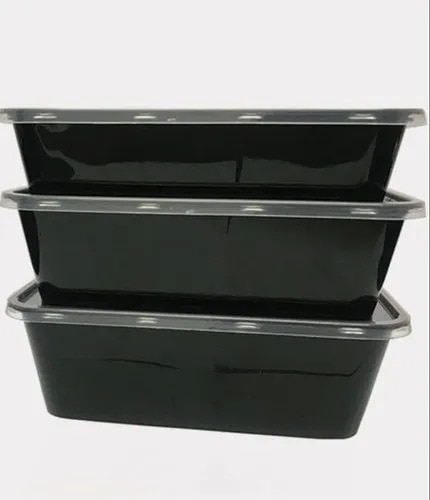 | Food Container 650ml Rectangular Plastic Food Container We are the Dealers of Food Containers, Sugarcane Bagasse Products, Brown Paper Bags & Pouches, Corrugated Pizza Box, Disposable Hand Gloves,... View product → |
Frequently asked questions
Which summer foods fit within a 650ml rectangular container?
Use it for one compact meal, such as rice with one curry, noodles, pasta or a substantial salad. Keep separate accompaniments limited because the 650ml rating is brim capacity, not usable fill volume.
Why is a rectangular container useful for summer meal packing?
Its straight sides use shelf and delivery-bag space efficiently, while the broad base helps distribute food in a shallow layer. The shape also makes portioning and stacking easier.
Which material and lid specifications suit summer takeaway food?
Match the material to the food’s heat, oil and reheating requirements. Choose a lid with a continuous sealing rim, secure corner engagement and a fit rated for the container base; use vented lids for foods packed hot when steam control matters.
How do you pack food to reduce steam, leaks and spoilage?
Leave headspace, avoid sealing liquid against the lid, keep sauces controlled and close the lid only after checking the rim is clean. Cool food through safe handling procedures before extended delivery, and keep chilled foods cold.
What tests show that a 650ml box is ready for delivery?
Fill a representative box, close it, invert it and shake it gently to check for leaks. Stack filled boxes, carry them in the intended delivery bag and inspect the lid, corners and seal after hot, cold and transit-condition tests.
Keywords