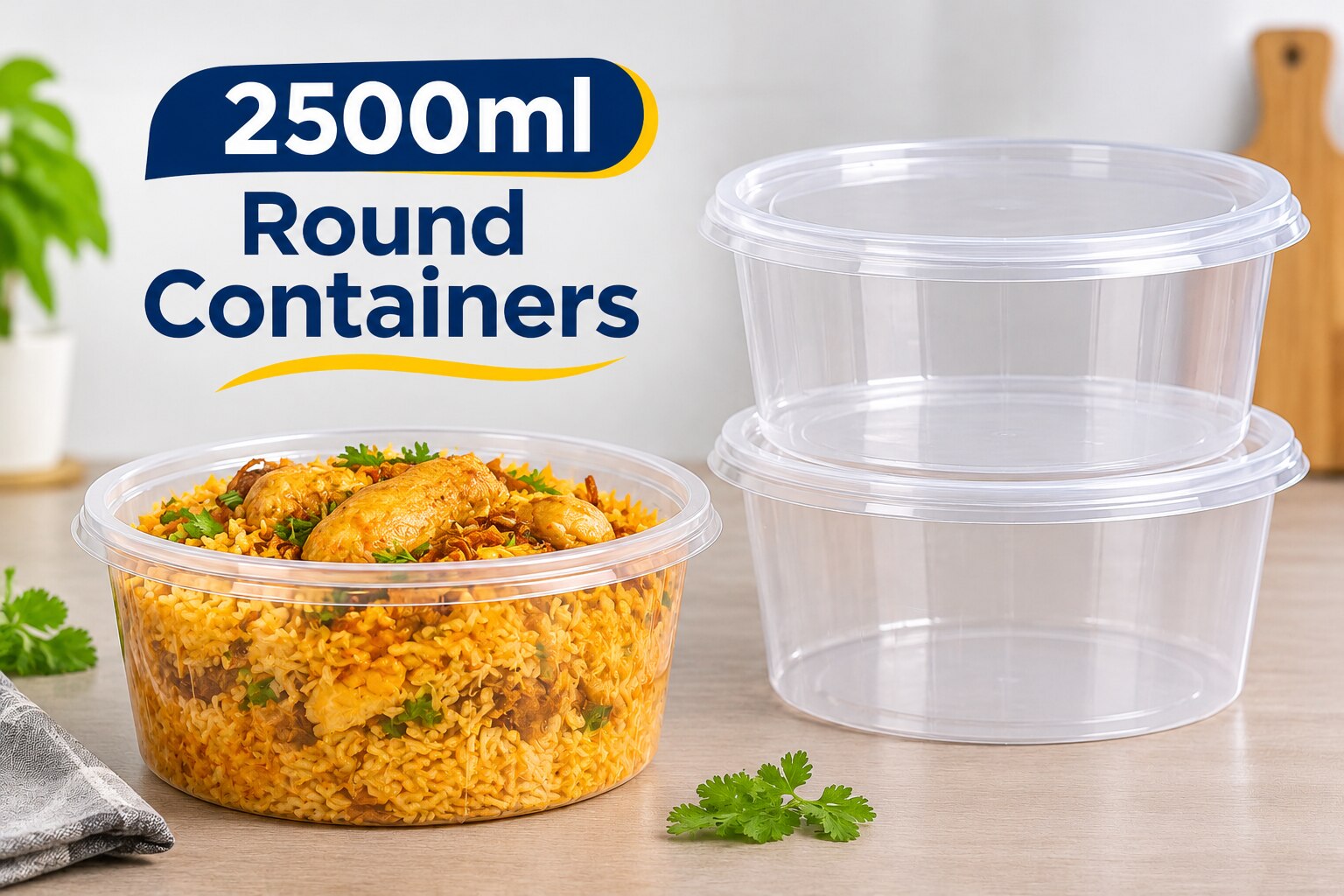
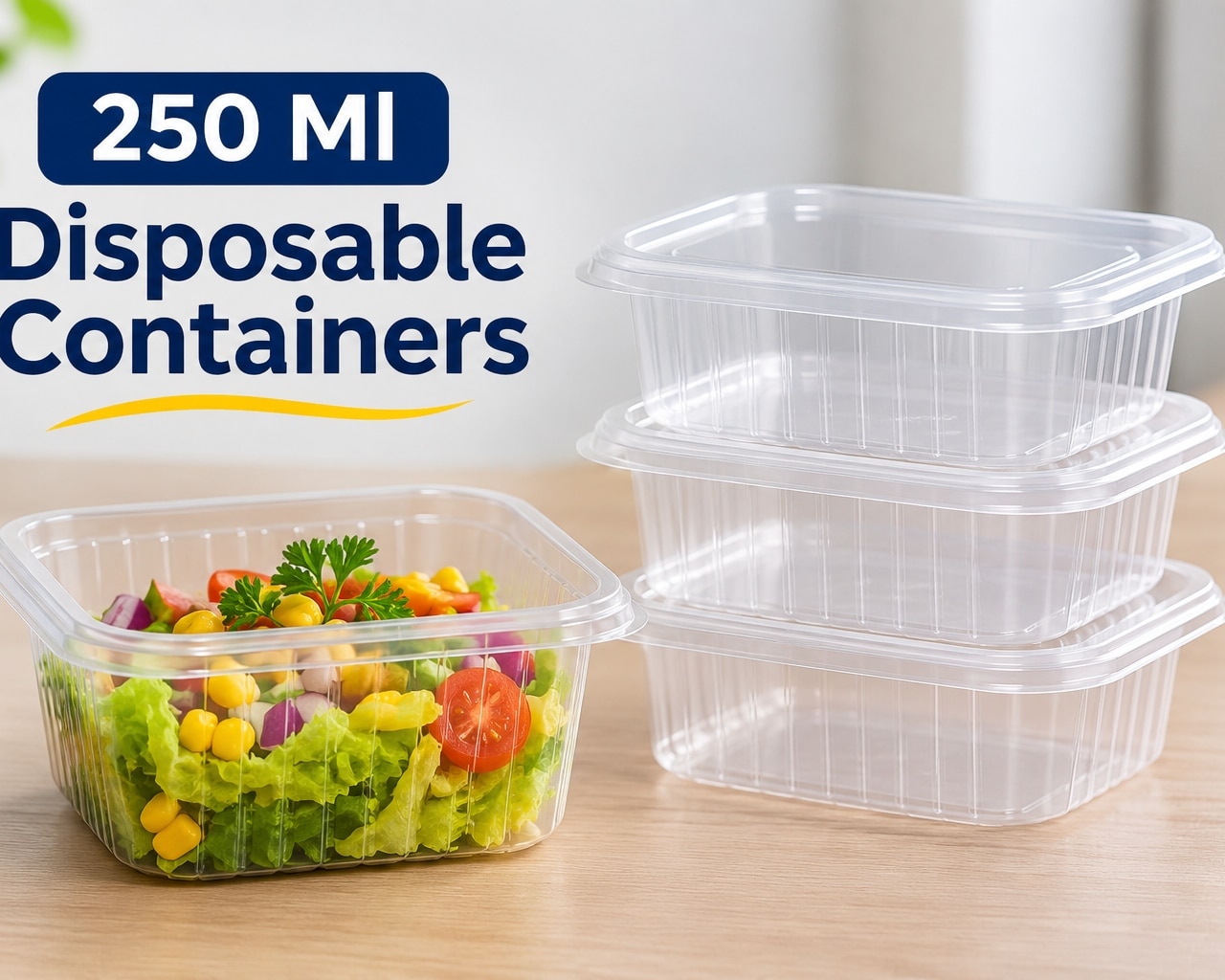
A 250 ml pack is usually a side or controlled single-serving format, not a dependable full-meal container. You can choose the right size by converting your actual serving into working volume, allowing headspace, and testing the closed pack with the food, lid and delivery conditions you use.
Key takeaways
- Use 250 ml containers for controlled sides and small single servings.
- Choose 100 ml for condiments; use larger packs for full meals.
- Test actual food, headspace, lid fit and leakage before ordering.
- Check material, food-contact use, temperature limits and compliance documents.
What restaurant portions fit inside 250 ml?
A 250 ml disposable food container for restaurant takeaway suits a controlled side portion or small single serving, not a dependable full meal. It works best when the food fits below the lid without pressing against it.
| Food type | Suitable use | Portion caution |
|---|---|---|
| Dal, curry or gravy | One side serving | Thin liquids need extra headspace |
| Rice accompaniment | Small serving with a main meal | Fluffy rice occupies more space than its weight suggests |
| Noodles | Small portion or combo component | Full noodle meals need room for movement |
| Desserts | Pudding, halwa or a small sweet | Leave space if the dessert expands or settles |
| Cut fruit | Small snack or chilled side | Juice can collect and spill |
| Snacks | A compact serving of fried or dry items | Bulky pieces may fill the container before reaching the target weight |
| Combo components | One measured side alongside a main | Test the actual serving, not the menu description |
Capacity is volume, not serving weight. Two hundred and fifty millilitres of water or a thin liquid is close to 250 grams, but cooked rice, solid snacks, thick sauces and oily gravies have different densities. A 250 ml container will not hold 250 grams of every food.
Ask for both the rim-to-rim, or brim, capacity and the recommended working fill. Leave roughly 10–20% below the rim for the lid, movement and sealing; leave more room for soup, thin gravy and steaming food. The working capacity is therefore lower than the advertised 250 ml.
Before ordering, measure the actual menu portion with a 250 ml measuring jug, transfer it to the candidate pack and close the lid. If food touches the lid or leaks when tilted, choose a larger container or reduce the portion.
When should you choose 100 ml, 250 ml or a larger pack?
A 100 ml disposable container for food portions is a condiment or tasting pack, while 250 ml is usually a controlled side or combo component—not a complete meal.
| Size | Best menu role | Avoid using it for |
|---|---|---|
| 100 ml | Chutney, raita, sauces, pickles, toppings, tasting portions and small desserts | Standard curry, dal or a substantial side |
| 250 ml | One measured serving of dal, curry, gravy, rice accompaniment, cut fruit, snack or dessert | Full meals, bulky foods or foods needing movement space |
| 500 gm or 650 ml | Main meals, biryani, rice portions and larger noodle servings | Tiny add-ons, where the pack wastes space |
| 1500 ml | Family-order rice, curry, biryani or mixed meals | Individual portions |
Choose 250 ml when the menu promises one defined side, such as dal with a thali or gravy with a rice combo. Keep the actual fill below the rim so the lid closes without pressing food upward; a nominal 250 ml is not the same as a usable 250 ml.
Reject 250 ml for these roles:
- A full biryani meal, where rice and pieces need both volume and movement space.
- Bulky fried foods, which crush against the lid and lose their texture.
- A large noodle serving, which needs room for scooping and mixing.
- Soup, thin gravy or steaming food when the remaining headspace is too small to prevent spills.
Use 500 gm or 650 ml after a measured main portion exceeds the 250 ml working fill. Reserve 1500 ml for family orders.
How do you test fill level, headspace and leakage before ordering?
Measure the actual menu serving with a 250 ml measuring jug; do not trust the printed capacity. Transfer that serving into the candidate pack, then remove food until the lid closes without touching it. The remaining gap is your working headspace.
- Start the trial with these fill gaps: 20% for soup and thin curry, 15% for oily gravy, 10% for hot rice, and 20% for food that releases steam. Adjust after observing splashes, condensation, or pressure under the lid.
- Test the filled pack at the temperature used for dispatch. Keep it upright for 10 minutes, then inspect the flange and lid joint for liquid.
- Turn it upside down for 60 seconds. Follow with a firm shake for 30 seconds, then check the outside, lid underside, and bag for leakage.
- Send one pack through a real delivery-bag journey, including stacking, vehicle movement, and the route’s usual duration. Reject the format if it leaks, tips, or forces the lid against the food.
Leak resistance belongs to the container-and-lid combination, not the 250 ml volume alone. Check the flange, snap fit, lid material, and seal against condensation, thin gravy, and oily food. A snap lid confirms closure, not tamper evidence. For visible opening evidence, specify a seal film, tamper band, or label crossing the lid joint.
Test these options before ordering small takeaway food containers in Bangalore.
What material and compliance details must a hot-food pack show?
A 250 ml plastic container for restaurants in Bangalore is suitable for hot food only when its material, lid and tested use match the actual dish and filling temperature. Check the resin marking, such as PP or PET, the lid material, stated temperature range, hot-fill status, microwave suitability and freezer suitability.
“Food grade” alone does not prove heat resistance, leak resistance or compatibility with oily and acidic food.
Ask the supplier for:
- The food-contact declaration for the container and lid
- A migration test report or conformity documentation for the specific material, food type and temperature under India’s Food Safety and Standards (Packaging) Regulations, 2018
- The recommended fill line and whether filling immediately after cooking is permitted
- The manufacturer’s evidence for hot-fill, microwave and freezer claims
- The compatible lid code, since a suitable base paired with the wrong lid can leak
PP is commonly specified for hot gravies and cooked food because it is more often designed for hot-fill or microwave applications. PET is more commonly associated with salads, chilled desserts and other cold foods. Neither resin is automatic approval: verify the product-specific temperature limit and test the actual container-and-lid combination.
Acidic curries, oil-rich gravies and immediate post-cooking filling expose weak seals quickly. Avoid assuming dark or black plastic will be recovered; some carbon-black pigments defeat optical sorting. Check current Karnataka waste rules and restricted single-use-plastic categories before standardising the pack, and do not reuse a disposable container beyond the supplier’s stated use.
How should a Bangalore restaurant run a purchasing trial?
Order a matched sample set before committing: 100 ml, 250 ml, 650 ml and any proposed meal size. A Bangalore distributor such as Ankita Enterprises can supply the comparison set, but test each pack with your own food, lids and delivery bags.
1. Fill each container with the normal serving, recording volume or weight and the working fill line. Record lid rejection rate, leakage after transport, stacking height, condensation, food appearance after the normal holding period and the number of packs rejected during service.
2. Run the route test at dispatch temperature. Close every lid, stack the packs as staff would, place them in the delivery bag and repeat the journey; count leaks, displaced lids and unusable packs.
3. Calculate the full operating cost per accepted meal, not the unit price alone. Include leaked meals, replacement packs, extra bags, labels, repacking labour and delivery complaints.
- Polymer identification for the container and lid
- Recommended fill line and brim capacity
- Compatible lid model and temperature limits
- Pack quantity and tamper options
- Food-contact declaration, migration test report or other supporting conformity documents
Adopt 250 ml for tested sides and controlled portions only when the trial passes your service limits. Move to a 500 gm or 650 ml pack when the measured meal exceeds the 250 ml container’s working capacity.
Related products
 | Food Container 250 Ml Disposable Plastic Food Container ₹3 We are the Dealers of Food Containers, Sugarcane Bagasse Products, Brown Paper Bags & Pouches, Corrugated Pizza Box, Disposable Hand Gloves,... View product → |
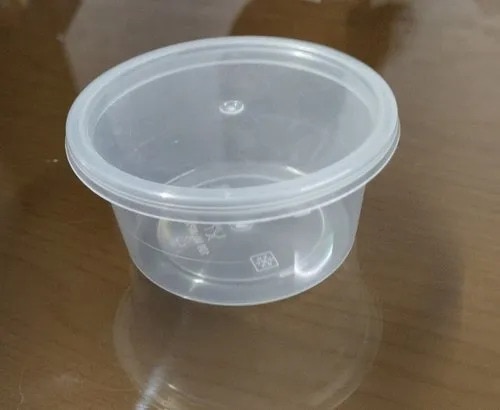 | Food Container 100ml Disposable Plastic Food Container ₹1.60 Material Plastic Packaging Type Plastic Packet Color Transparent Usage/Application Event and Party Supplies Size 4 inch Country of Origin Made in... View product → |
Frequently asked questions
What restaurant portions fit inside a 250 ml container?
A 250 ml container suits controlled side portions, gravies, curries, desserts or small single servings that fit below the lid without pressing against it. It is not a dependable full-meal pack.
When should you choose a 100 ml, 250 ml or larger container?
Choose a 100 ml disposable container for sauces, chutneys and small food portions. Choose 250 ml for a controlled side or small serving. Choose a larger container when the meal needs more volume, separation or headspace.
How do you test a takeaway container before ordering?
Fill the container with the actual food, measure the fill level, leave headspace below the lid, close it, invert it over absorbent paper and transport it as staff would. Check for leaks, lid release, warping and spills.
What should a hot-food disposable pack show?
Check the material name, food-contact suitability, temperature limit, batch or lot identification, manufacturer details and compliance documents. Confirm that the pack is suitable for the food temperature and reheating method you use.
Keywords