A 500ml rating tells you volume, not the weight of the food you can sell in it. By comparing usable fill levels, menu fit, materials, lid performance, and delivery tests, you can decide whether this size improves portion control without creating leaks, crushed food, or avoidable packaging waste.
Key takeaways
- Treat 500ml as volume, not a guaranteed 500-gram food portion.
- Use round packs for one modest serving of curry, rice, noodles, or sides.
- Match the material and lid to heat, grease, condensation, and transport distance.
- Test filled packs for leaks, lid release, crushing, and stack stability.
What does 500ml hold in a real takeaway portion?
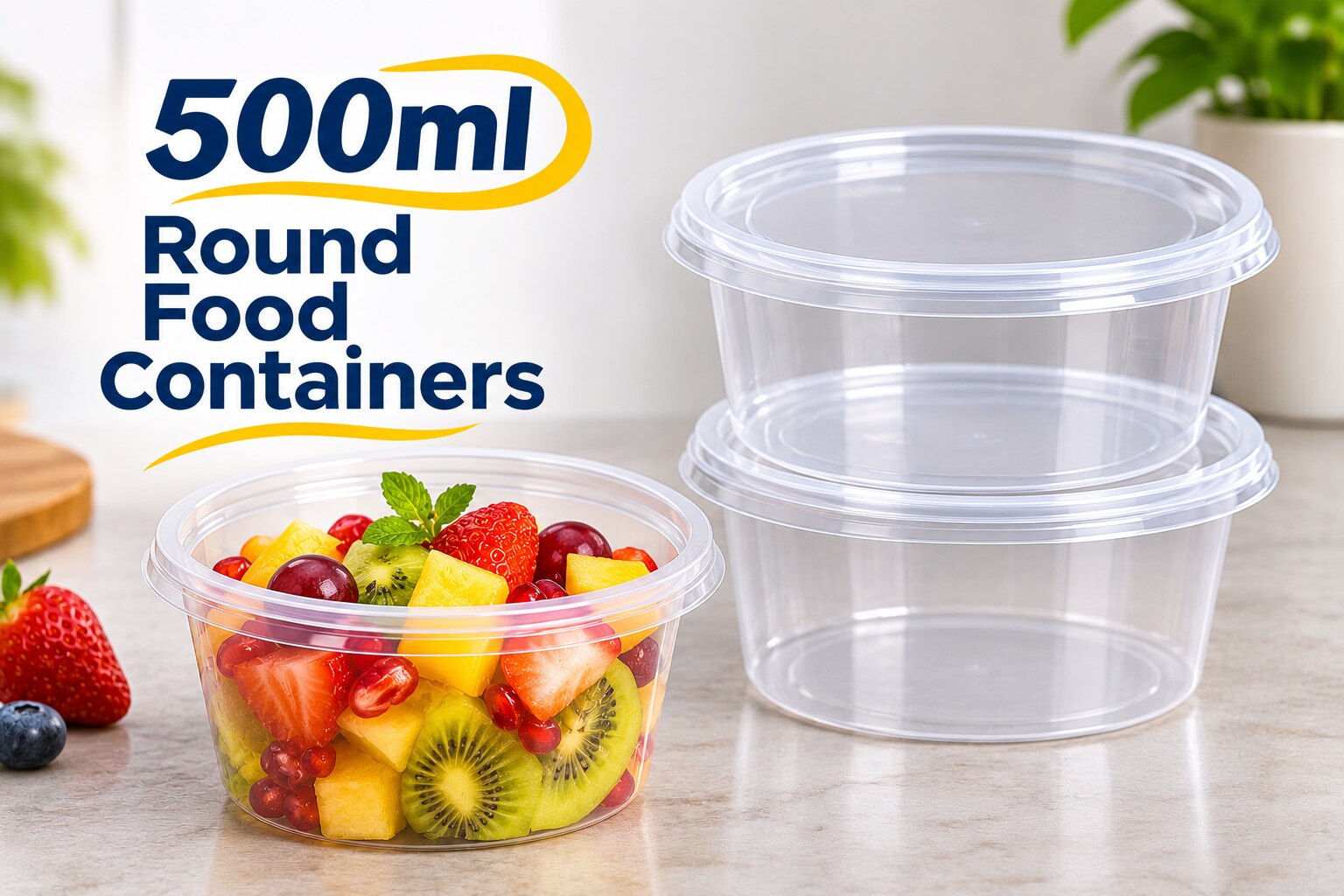
A 500ml container for food businesses usually suits one modest serving, but its rating describes volume, not weight. Five hundred millilitres is not 500 grams: rice, curry, noodles, gravy, and fried food have different densities and settle differently.
The nominal capacity reaches the rim. Your practical fill level must sit below it, leaving room for the lid, movement, sauces, steam, and expansion from hot food. Filling gravy to the rim can soil the sealing area and cause leaks.
- Curry: one individual serving, with headspace above the gravy
- Rice or biryani: one moderate portion, depending on how tightly it is packed
- Noodles: one serving, after allowing for settling and sauce
- Dessert: one individual portion
- Gravy: a useful single-serving quantity when the lid leaves safe clearance
- Fried food: a portion that needs space to avoid crushing and trapped steam
Test the actual menu item rather than converting millilitres into grams. Weigh a filled sample with a weighing scale, or measure the usable quantity with a measuring jug, then repeat the test at the intended packing level.
The 500ml food container packing benefits come from a consistent size: repeatable portions, quicker packing decisions, simpler stock counting, and more predictable food-cost control. Those gains do not come from the round shape alone; any container with a repeatable usable capacity can provide them.
Which takeaway meals suit a round 500ml pack?
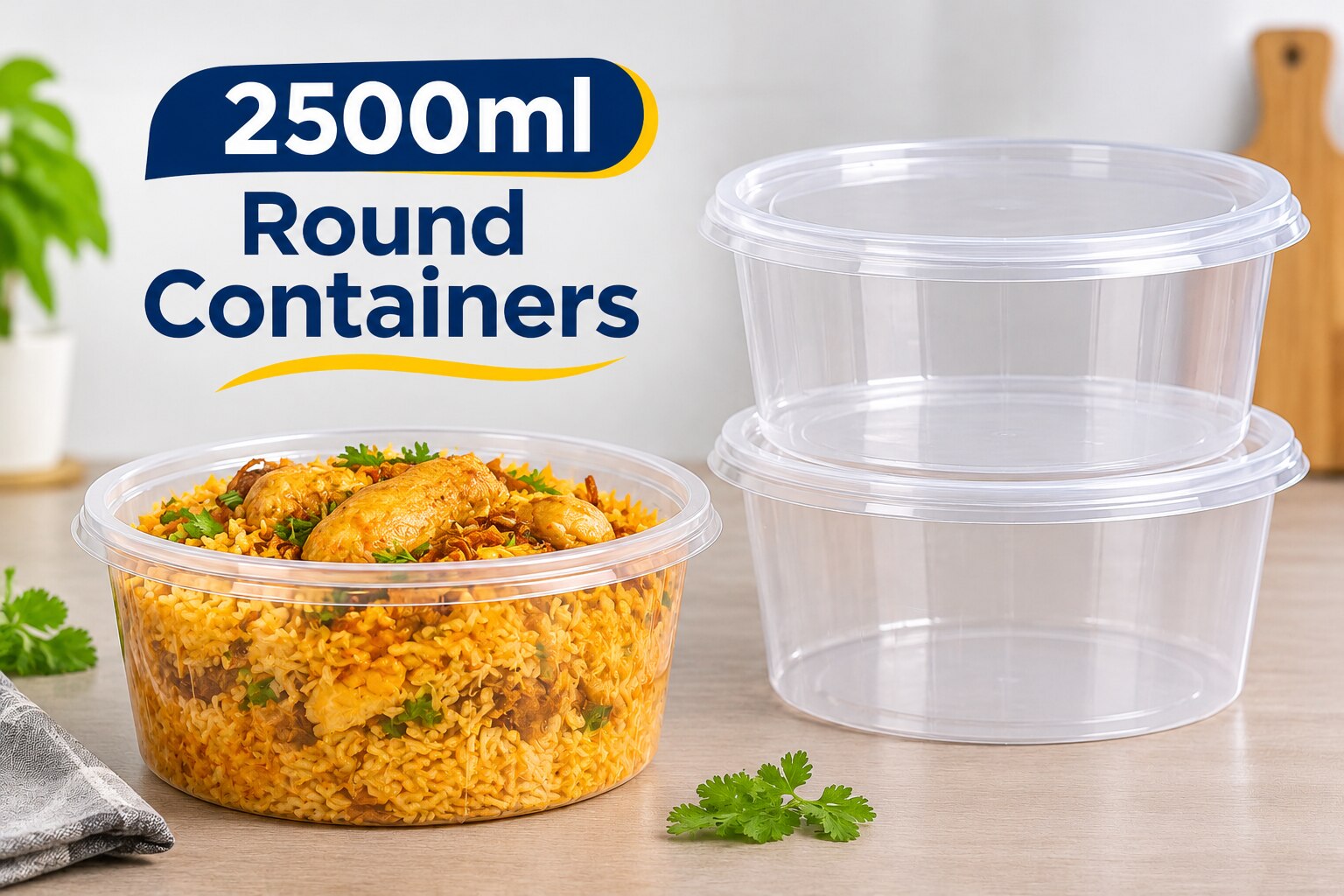
Curries, dal, gravies, biryani, rice portions, noodles, soft snacks, desserts, and side dishes suit a 500ml round food container for takeaway meals when the serving fits its deep circular cavity. A ladle reaches the bottom easily, and fewer corners leave less food behind during filling or scraping.
That does not make the pack leak-proof: lid fit, rim cleanliness, and sealing force control leakage.
A 500ml round container for takeaway shops in Bangalore is not interchangeable with these alternatives:
| Option | What it means | When it applies |
|---|---|---|
| 500gm container | 500gm measures mass, not volume; food density changes the weight held | Choose only after weighing the actual recipe |
| 500ml rectangular | Same nominal volume, with more efficient use of rectangular bag space | Better for flat portions or tightly packed delivery bags |
| 250ml | Smaller cavity | Chutney, dessert, or small side dish |
| 650ml | More room for volume or sauce | Larger portions or saucier servings |
| 750ml or 1,000ml | Combination-meal capacity | Rice with curry, sides, and accompaniments |
Flat foods, large cutlets, wraps, and meals needing separate compartments fit poorly because the round footprint wastes space and cannot separate components. Matched round bases and lids stack neatly, but supplier dimensions are not interchangeable; recheck lid fit, stack height, bag fit, and crate capacity after a supplier change.
Which material and lid specifications matter for hot Bangalore orders?
Choose the material by the menu, not by the label “500ml container for food businesses.” PP, PET, paperboard, bagasse, and another material must be matched to hot filling, oil, acid, refrigeration, freezing, and reheating conditions.
| Material | Verify before buying | Common failure |
|---|---|---|
| PP | Hot filling, oily or acidic food, refrigeration, freezing, reheating | Warping or leakage if the grade is unsuitable |
| PET | Food temperature and oil or acid exposure | Deformation during hot filling or reheating |
| Paperboard | Coating, hot-food limit, oil resistance, refrigeration | Soaking, softening, or loss of stiffness |
| Bagasse | Hot, oily, acidic, refrigerated, or frozen use | Soggy walls or lid-fit failure |
| Another material | Exact composition and stated use limits | Assuming the material name proves performance |
Microwave-safe, oven-safe, freezer-safe, compostable, and recyclable are separate claims. Request food-contact suitability, intended temperature conditions, material identification, and migration or conformity documentation under the Food Safety and Standards (Packaging) Regulations, 2018.
Inspect wall stiffness, transparency, base deformation, lid-to-rim geometry, and the force needed to seal the lid. A round shape does not guarantee leak resistance.
For the 500ml round food container benefits for takeaway orders in Bangalore, vents can reduce pressure and condensation in rice or fried food, but they can release steam, oil droplets, or curry.
Keep printing, labels, and adhesives outside direct food contact, especially with oily food. Do not infer heat, freezer, microwave, or leak performance from a photograph or material name; verify the supplier’s exact specification.
How should you test leakage, stacking, and delivery performance?
A filled-route trial—not a label or unit-price comparison—shows whether the pack survives delivery. Fill samples with the hottest representative menu item at the intended practical fill level, leaving space below the rim. Close each lid on a level surface and check whether gravy or oil reaches the sealing rim.
Sauce, oil, or rice grains trapped under the lid can defeat an otherwise suitable seal.
Invert each filled pack, shake it gently, and inspect the rim and lid for seepage or lift. Treat this as a purchasing trial, not certification compliance. Then stack packs in the actual dispatch crate or delivery bag and carry them on a normal two-wheeler route. Inspect:
- Leakage, deformation, condensation, portion loss, lid movement, and customer-facing appearance.
| Test | What it reveals | Why it is insufficient |
|---|---|---|
| Empty-container check | Cracks, warped bases, and lid fit | It does not reproduce hot food, pressure, or vibration |
| Water test | Basic seal seepage | Water lacks food viscosity, oil, heat, and settling |
| Food-and-route trial | Real leakage and delivery behaviour | Use it for purchasing, not certification |
A round food container for takeaway meals can align and stack well only when its base and lid are a matched system. Recheck stack height, bag fit, and unit count after every supplier change; nominal 500ml capacity does not guarantee matching dimensions.
The 500ml food container packing benefits count only if the pack reaches the customer intact.
How can a Bangalore takeaway shop turn the size into a reliable packing system?
Set the 500ml pack by recipe, not by its lowest unit price. A 500ml round food container benefits for takeaway orders in Bangalore only when its usable fill level, food weight, and leak performance are known for each menu item.
Create a packing record for every recipe:
- Record the fill level below the rim, usable volume, and food weight.
- Test the actual portion in a filled container, including gravy, oil, steam, and movement.
- Assign the pack only when the trial confirms portion fit and leak resistance.
- Keep the standard with the recipe card so new staff do not overfill it.
Use this record when evaluating a 500ml round container for takeaway shops in Bangalore:
| Decision | Compare or verify | Why it matters |
|---|---|---|
| Material legality | Exact PP, PET, paper, bagasse, or compostable product against current Karnataka and Bengaluru notifications | A 500ml size alone does not make a product permitted or prohibited |
| Food-contact evidence | Food-contact suitability, temperature limits, and migration or conformity documents | A legal pack without suitable evidence is still a poor food-contact choice |
| Environmental performance | Container mass, lid mass, recycled or renewable content, leakage waste, transport volume, and local collection acceptance | “Recyclable” does not prove Bangalore’s waste system accepts it |
For plastic packaging, establish whether your brand is an obligated entity under India’s Plastic Waste Management and extended-producer-responsibility framework. Retain supplier invoices, specifications, material details, and compliance records.
Ankita Enterprises can help compare available formats, confirm dimensions and material specifications, and supply trial quantities for a simulated order before standardising stock.
Related product
 | Food Container PG Brand We are the Dealers of Food Containers, Sugarcane Bagasse Products, Brown Paper Bags & Pouches, Corrugated Pizza Box, Disposable Hand Gloves,... View product → |
Frequently asked questions
What does a 500ml container hold in a real takeaway portion?
A 500ml rating measures volume, not weight. Rice, curry, noodles, gravy, and fried foods occupy different weights and settle differently, so test the actual portion with a measuring jug and weighing scale.
Which takeaway meals suit a round 500ml container?
A round 500ml container suits one modest serving of foods such as curry, rice, noodles, pasta, dal, desserts, and sides. Avoid using it for meals that need separate compartments or toppings that lose texture when enclosed.
Which material and lid specifications matter for hot Bangalore orders?
Check the container’s hot-food temperature rating, food-contact suitability, grease resistance, and lid fit. Choose a vented lid for steam-sensitive foods when appropriate, and confirm that the seal remains secure after filling with hot food.
How should you test a 500ml container for leakage and delivery performance?
Fill it with the hottest food you plan to dispatch, close the lid, invert it over absorbent paper, shake it gently, and inspect for leaks. Test stacking, lid release, crushing, condensation, and stability during a simulated delivery.
How can a Bangalore takeaway shop turn 500ml containers into a reliable packing system?
Set a standard fill line, portion weight, lid type, label position, and stacking limit. Record the food temperature, sealing time, delivery duration, and customer complaints so staff can pack consistently.
Keywords