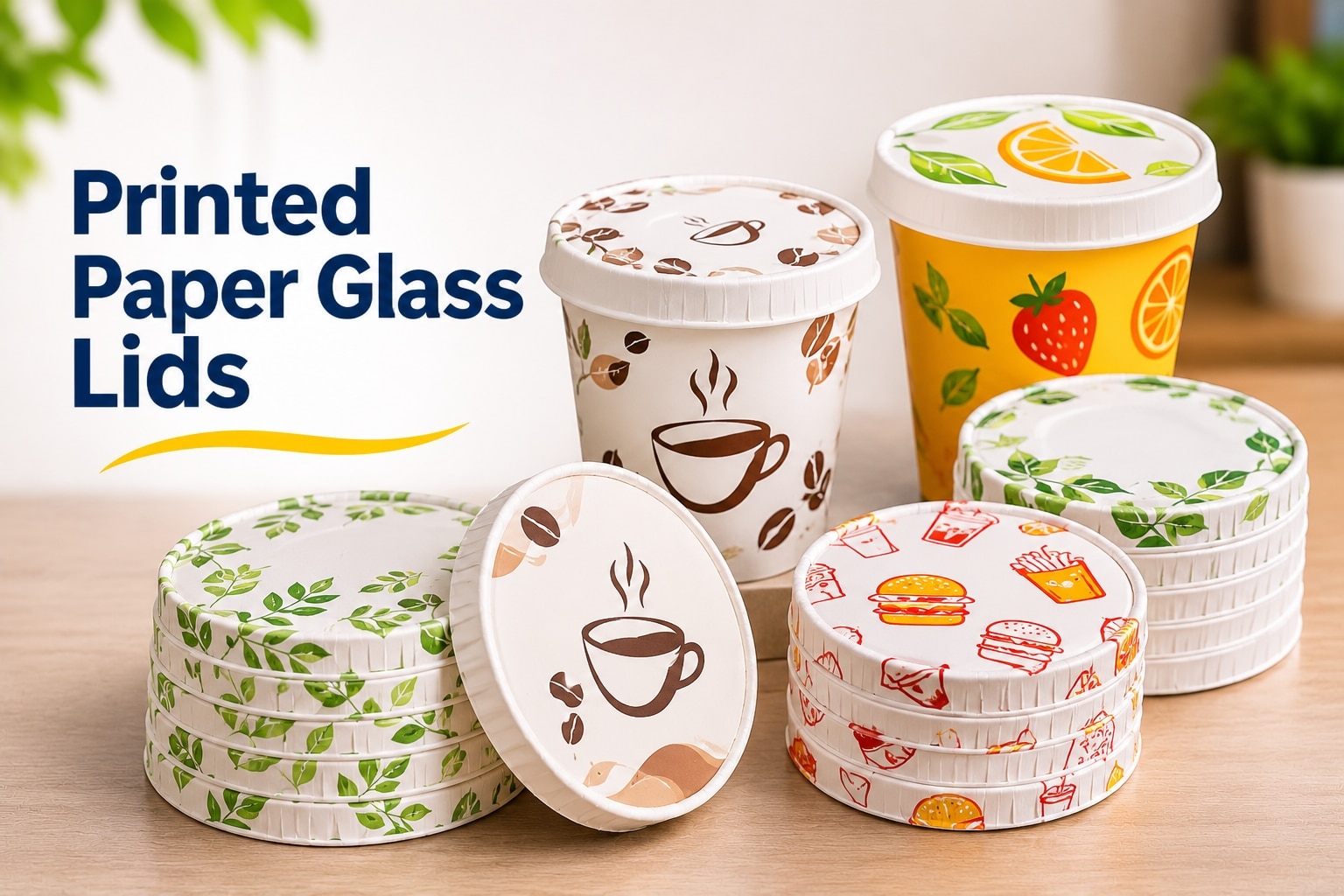
Rain is only one part of the risk: humidity, cold-drink condensation, wet hands, wind and stacking can all loosen a paper lid or soften its rim. By the end, you will know how to match the lid to the glass, test it with the actual drink, and pack cups for outdoor service without relying on a paper or water-resistant label.
Key takeaways
- Match the lid to the glass rim diameter, profile and drinking opening.
- Test chilled drinks for condensation, softening, curling and lid movement.
- Pack lids only after checking the cup rim is clean and dry.
- Request evidence for fibre content, coatings and compostability claims.
What Bangalore monsoon moisture does to a printed paper lid
Brief rain contact is less demanding than hours of humid air or continuous condensation beneath a chilled drink. For printed paper glass lids for monsoon drink service in Bangalore, moisture can soften fibres, reduce stiffness, curl the rim and make the lid-cup interface slippery.
A water-resistant surface is not automatically leakproof. Liquid can still enter through a cut edge, drinking aperture or lid rim, while wind can lift a loose lid from a wet cup during outdoor carrying.
Before approving a lid, ask for:
- The paperboard grade, coating type, coated side and basis weight.
- Confirmation that the ink, varnish, adhesive and coating suit the intended food-contact arrangement.
- A printed surface kept outside, away from the drink and the drinker’s mouth.
- Wet-hand handling with the intended cup, including lifting, carrying and stacking.
- Inspection for softened fibres, rim curl, sliding, leakage and lid lift after condensation exposure.
Test a disposable glass lid for rainy weather in Bangalore with a chilled drink for the full service period, not only by examining a dry sample. Treat any drinking slot or cross-cut as a weak point: condensation and repeated sipping can enlarge it, soften its edges or tear it towards the rim.
How to confirm that the lid fits the exact glass
Approve a lid only against the exact cup it will serve; nominal diameter alone does not prove compatibility.
1. Record the cup supplier, filled volume, rim diameter, rim profile and cup shape. Keep separate records for paper cups, rigid plastic tumblers and glass tumblers. A rolled paper-cup rim has different geometry from a rigid vessel, even when both measure the same diameter.
2. Assemble the precise cup and lid, then press around the full circumference. Accept an even snap-fit with no lifted sections. A loose lid can pop off when a wet cup is carried or stacked; an overly tight lid can split the rim, deform the flange or slow service because staff must force it down.
3. Fill the assembled cup with the planned drink. Carry it one-handed, place it in the actual tray, lift it again and repeat with damp hands. Check for lid movement, rim wetting and loss of grip.
4. Approve the exact cup-and-lid combination, glass family and batch. Do not accept a sample from another vessel or batch as evidence for a paper glass lid for monsoon catering in bangalore orders. A disposable glass lid for rainy weather in Bangalore must match the vessel geometry, not just its stated size.
How drink temperature and beverage type change the failure risk
A single lid design is not automatically stable for every drink. Temperature, viscosity, ice, carbonation and the drinking opening change where liquid travels and how quickly paper loses stiffness.
Cold drinks create continuous underside condensation, which can wet the rim without any rain touching the lid. For drink packaging for monsoon events in Bangalore, fill assembled cups with the coldest planned beverage and hold them for at least the expected service interval.
- Check for rim wetting, lid lift, seam leakage and loss of rigidity.
- Tilt an iced drink during a controlled carry test; moving ice can push liquid toward the drinking opening.
- Sip thick juice through the intended opening; juice clinging underneath can expose weak seams.
- Leave headspace in carbonated drinks and move them carefully. Bubbles and pressure can force liquid toward an aperture or loose edge.
- Test a drinking slot or cross-cut with repeated straw insertion or sipping, then inspect for enlargement, softening and tears running toward the rim.
- For hot tea or coffee, check for a steam vent. Without one, do not seal a freshly boiling drink as a pressure test; fill below the rim, retain the planned headspace and observe splashing during a controlled carry.
- Validate the planned stack height with filled cups, including vehicle movement and manual lifting. Wet lids can buckle or pop off even when an individual cup passes.
What monsoon packing procedure reduces leaks during service
Reduce monsoon leaks by treating the cup, lid, carrier and carton as one system. For drink packaging for monsoon events in Bangalore, use this operating sequence:
1. Keep cups and lids inside sealed inner packs until use. Store cartons off wet floors and away from open loading bays. If a carton absorbs rainwater, drying its surface does not prove that the lids retain hygiene, fit or compression strength.
2. Before filling, wipe the cup exterior completely dry. A wet surface reduces staff grip and lets the lid flange slide during fitting.
3. Fill below the rim, leaving headspace for the planned drink, ice and movement. Overfilling sends liquid toward the drinking opening when the cup tilts.
4. Seat the lid by pressing around the entire rim, not only the centre. Check the drinking opening, then run a finger around the edge to find lifted sections.
5. Hold one assembled cup for the expected service interval and perform a short carry test. In heavy rain, put sealed cups in a carry tray or secondary bag; the lid is not a rain shield.
6. Validate the planned stack height with assembled cups, including wet handling, vehicle movement and manual lifting. A lid that survives alone can buckle or pop off inside a carrier or delivery crate.
What should you test before approving a supplier’s monsoon lid
Approve a sample only after it survives the conditions of your event, not a dry visual inspection. Request printed paper glass lids for monsoon drink service in Bangalore matched to the exact glass, including supplier, rim diameter, rim profile and fill volume.
- Assemble dry cups and lids; check even snap-fit around the full circumference.
- Fill, carry one-handed, place in the planned tray or crate, lift again, and repeat with damp hands.
- Hold the coldest planned drink for the full service interval. Record leakage, lid retention, rim wetting, loss of rigidity and outer-rim slipperiness.
- Rub the print with damp hands and reject ink transfer, fibre delamination, rim curl, enlarged slots or torn cross-cuts.
- Test the intended stack height with assembled cups during manual lifting and vehicle movement.
- At receipt, reject cartons with rain exposure, crushed corners or visible moisture.
Ankita Enterprises is one Bangalore supplier you can ask for matched cup-and-lid samples, but these results—not a product name or “water-resistant” claim—should decide approval. For a paper glass lid for monsoon catering in Bangalore, ask which performance is actually promised:
| Term | What it means | What to test |
|---|---|---|
| Leak-resistant | Limits liquid escape | Cold drink standing test |
| Splash-resistant | Handles brief surface splashes | Damp handling and rain exposure |
| Vented | Provides a steam or pressure path | Hot-drink carry test |
| Intended for delivery | Designed for movement and handling | Tray, stack and vehicle test |
Related products
 | Disposable Glass Printed Paper Disposable Glass We are the Dealers of Food Containers, Sugarcane Bagasse Products, Brown Paper Bags & Pouches, Corrugated Pizza Box, Disposable Hand Gloves,... View product → |
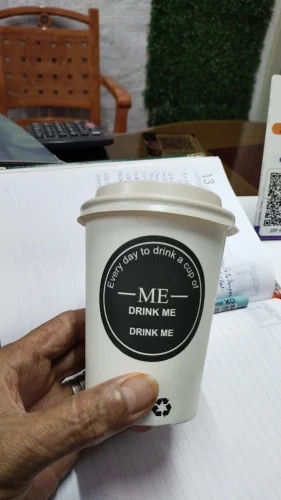 | Disposable Glass We are the Dealers of Food Containers, Sugarcane Bagasse Products, Brown Paper Bags & Pouches, Corrugated Pizza Box, Disposable Hand Gloves,... View product → |
What paper disposal and compostability claims mean after the event
After the event, a paper-looking lid is not automatically recyclable or compostable. The coating, barrier layer, ink and residue from tea, coffee, juice or milk determine whether a local waste processor can recover it. A disposable glass lid for rainy weather in Bangalore can perform well during service yet fail the intended disposal route.
1. Separate clean, unused paper packaging from used lids and follow the venue’s waste contractor instructions. Do not mix drink-contaminated lids into a clean paper stream unless the contractor accepts them.
2. Ask for a named certification or standard, such as EN 13432, ASTM D6400 or ISO 17088, and request the conditions covered by the certificate.
3. Treat “industrially compostable” as a facility-specific claim. It does not mean the lid will break down beside a road, in mixed municipal waste or in a home compost bin. Bangalore rain is not a composting pathway.
4. Record the approved recovery route in procurement. A coating that resists monsoon moisture can also prevent recycling or composting after use.
Frequently asked questions
How does Bangalore monsoon moisture affect printed paper glass lids?
Humid air and condensation can soften paper fibres, reduce stiffness, curl the rim and make the lid-cup interface slippery. Continuous condensation is a tougher test than brief contact with rain.
How do you confirm a paper lid fits the exact glass?
Check the lid against the glass rim diameter, rim profile and sidewall shape. Fit a filled sample, inspect the seal around the full circumference and test whether the lid shifts when the cup is carried.
Which drinks create higher failure risk for a disposable glass lid in rainy weather?
Chilled drinks create continuous condensation beneath the lid, while hot drinks expose the lid to heat and vapour. Fizzy, pulpy or frothy beverages also test the drinking opening and seal more severely than still water.
What should you test before approving a supplier's monsoon lid?
Run a filled-cup test using the intended beverage, temperature and holding time. Check for softening, curling, leaks, print transfer, lid movement and damage after condensation, handling and short transport.
Does a paper lid remain compostable after a monsoon event?
Do not infer compostability from the word paper. Check the fibre, coating, ink and adhesive claims, then follow the named composting conditions and local waste-collection instructions after use.
Related product
 | Disposable Glass We are the Dealers of Food Containers, Sugarcane Bagasse Products, Brown Paper Bags & Pouches, Corrugated Pizza Box, Disposable Hand Gloves,... View product → |
Keywords